
Compact plants and wastewater treatment retrofits
How prefabrication, equipment integration, and retained infrastructure can simplify a treatment plant.
Read articleTreatment plant modernization
At CAMINO Nazareth in Barranquilla, Vandens modernized an institutional wastewater plant with a 21 m³/day design capacity by reusing tanks and renewing biological stages, pumping, aeration and controls.
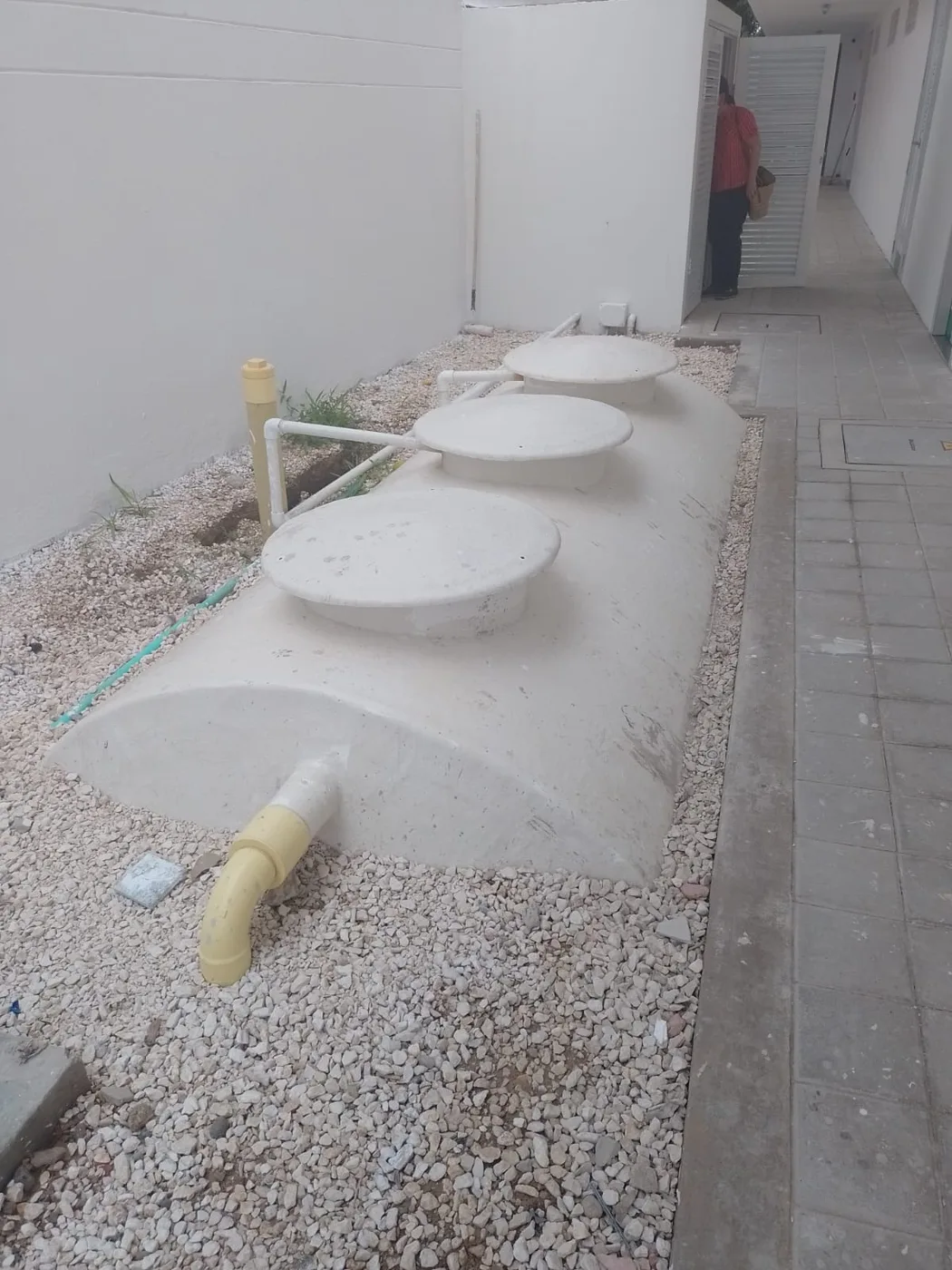
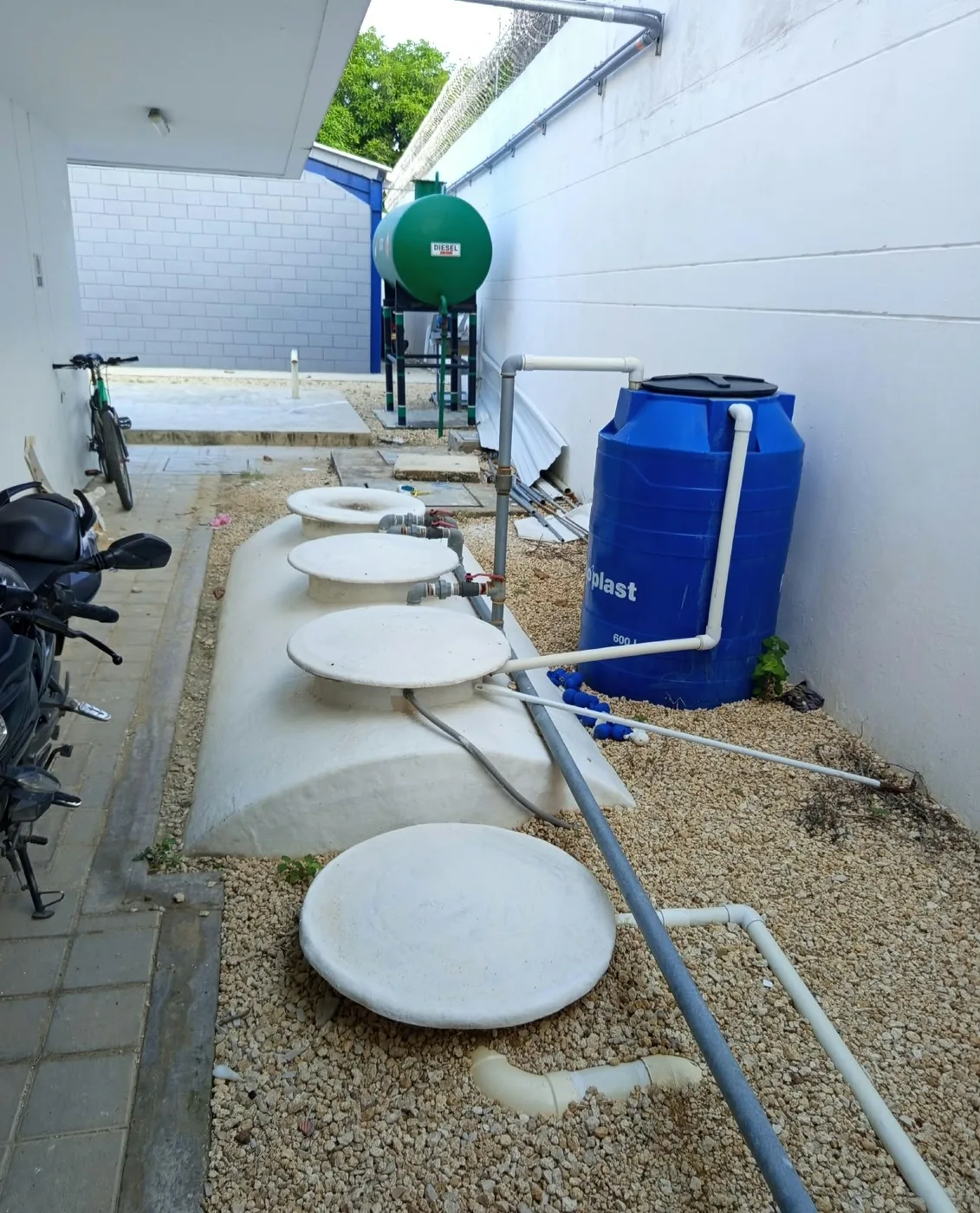
CAMINO Nazareth already had tanks and civil structures in place. Replacing everything would have meant more construction than necessary. Vandens chose to adapt the sound infrastructure and reorganize treatment inside it, installing new equipment where it added value.
The treatment plant handles domestic wastewater at a healthcare facility in Barranquilla. Instead of proposing an entirely new plant on a different footprint, Vandens started with the tanks already on site.
The concrete primary tank was modified internally to create settling chambers, allowing solids to separate before biological treatment. Retaining this structure focused work and expenditure on the process and equipment that actually needed improvement.
The existing white horizontal fiberglass vessel was modified internally to create two consecutive biological reactors. Water can therefore pass through two treatment stages within a compact installation instead of requiring several new civil structures.
The technical proposal specified a 21 m³/day design capacity. Arranging the biology in stages helps distribute aeration and make solids management part of a coordinated process.
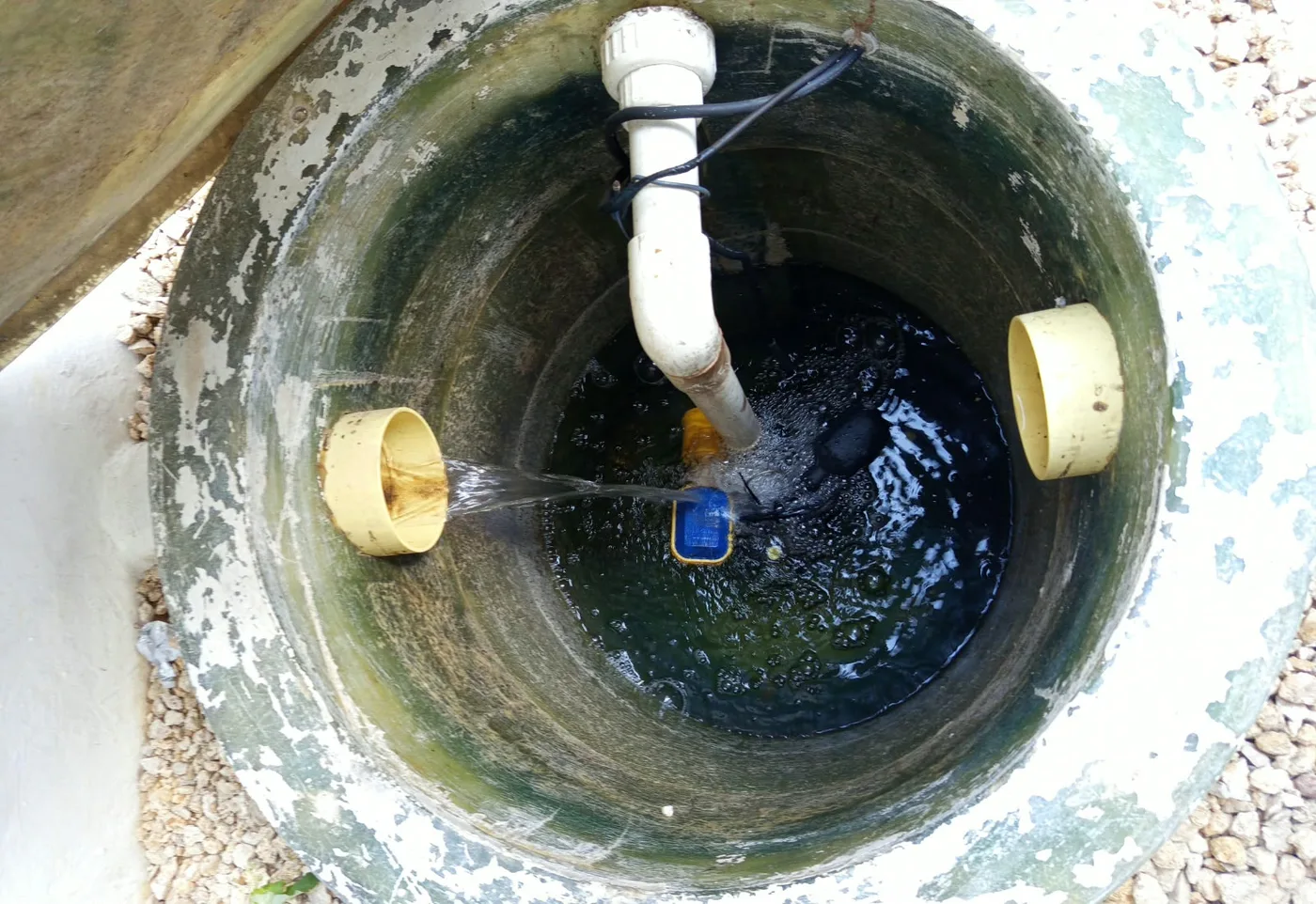
The intervention added pumps, blowers and a control panel. Pumps move water between units; blowers provide the air the reactor microorganisms need; the panel helps operators manage the equipment as a system.
Authentic before-and-after photographs show access to the buried tanks and the renewed visible connections. This project demonstrates a practical advantage of tailored engineering: invest where treatment needs improvement while keeping what already works.
Internal adaptation gave the existing concrete structure a new process role.
The fiberglass reactor was divided to organize treatment in series within the same vessel.
New pumps, blowers, and controls support the plant's hydraulic transformation.
Keeping sound assets avoided unnecessary construction and kept the project focused on operation.
How prefabrication, equipment integration, and retained infrastructure can simplify a treatment plant.
Read articleFrom river stones to treatment reactors: how communities of microorganisms help clean water.
Read articleFlow, loads, target quality, process train, validation, and operating conditions.
Read articleTell us what wastewater you need to treat, what infrastructure you already have and how the plant needs to operate.
Optional analytics
May we collect aggregate usage statistics to improve this website? We do not share contact inquiry details. Declining does not affect the site.