
Understanding MBBR and biofilm carriers
Look at stones on a riverbed or submerged roots: a living film of microorganisms can grow on these surfaces. MBBR brings that idea into a tank using small moving carriers.
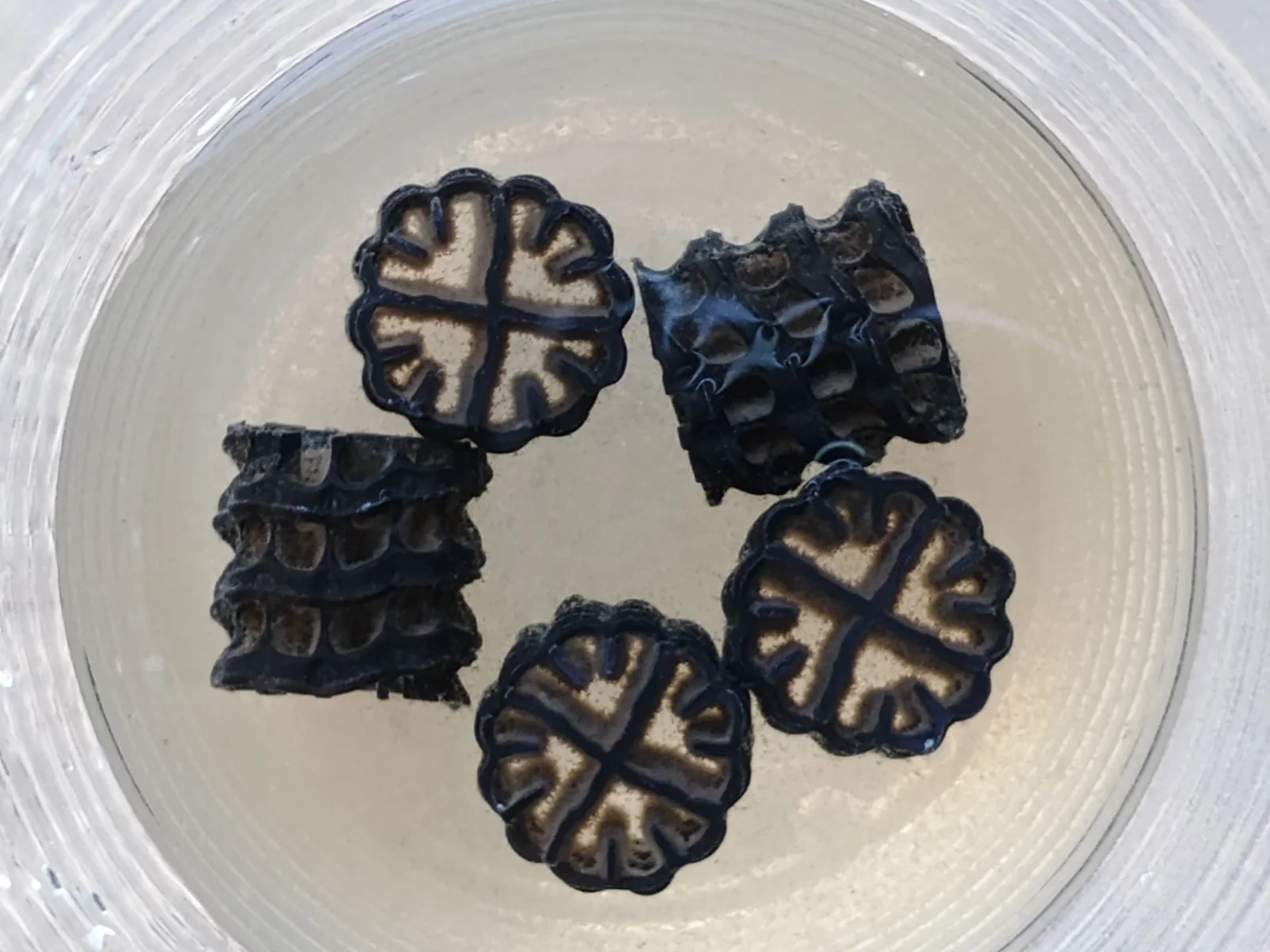
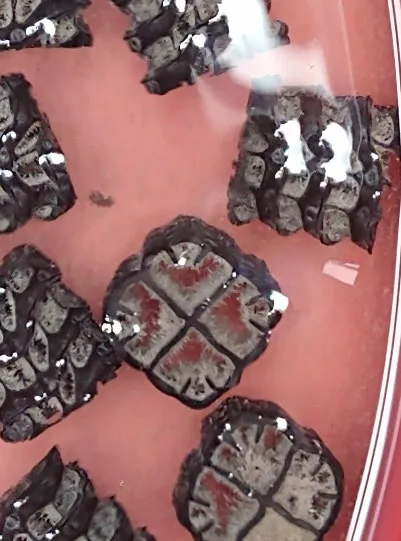
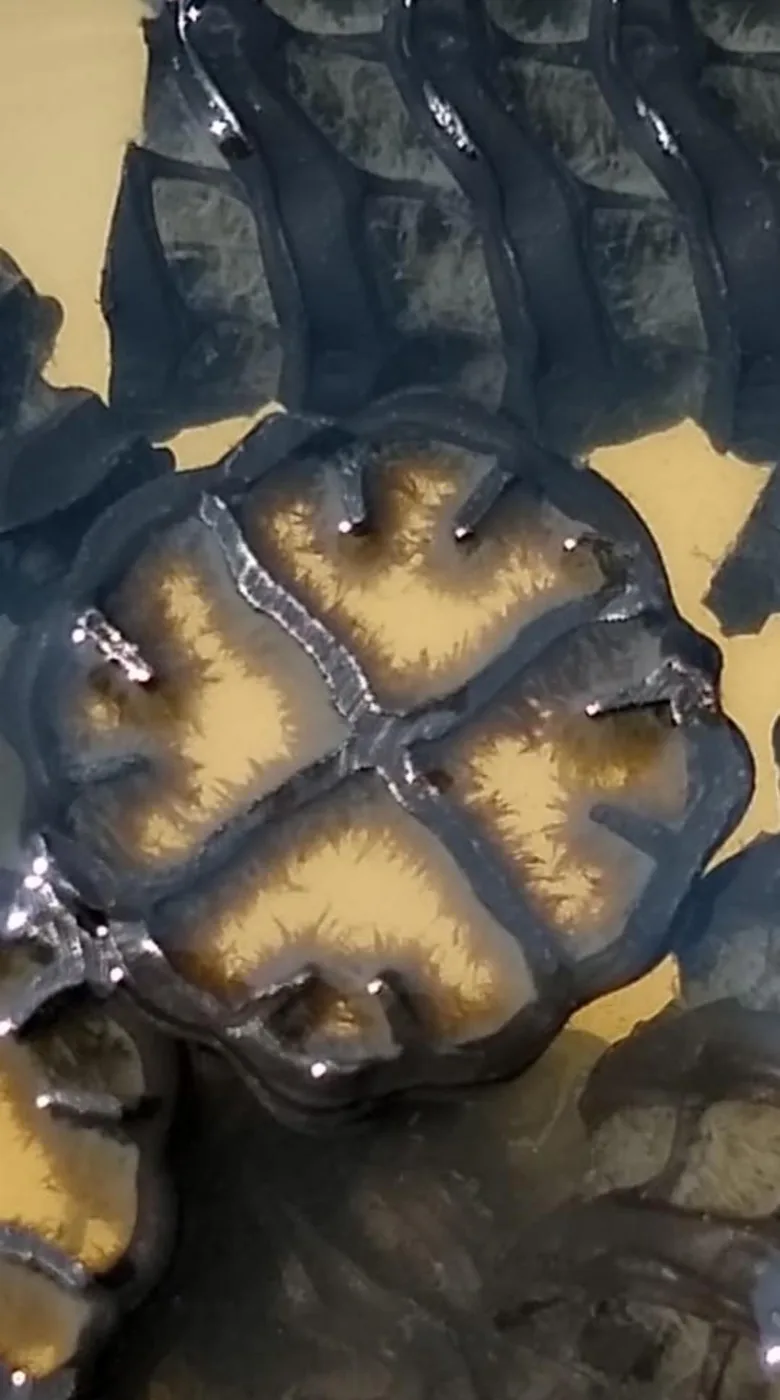
AGAR®* — * technology developed by Aqwise, now part of BlueGen Water.
From the reactor to life on a carrier
Start the tour to see blue and green carriers move independently, isolate one, and move closer to its biofilm and biological transformations.
Aeration supplies oxygen and mixing. Every carrier translates and tumbles independently through the water.
- Independent motionMixing brings water, organic matter, and nutrients to each carrier.
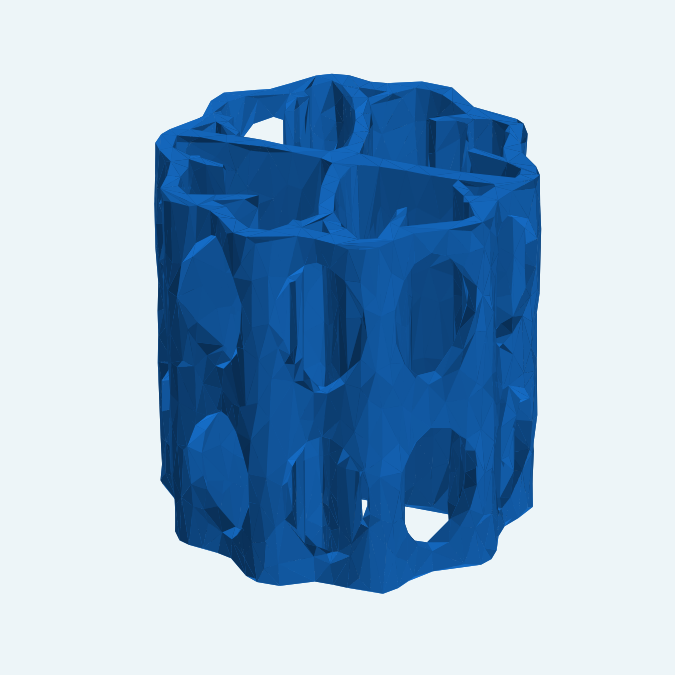
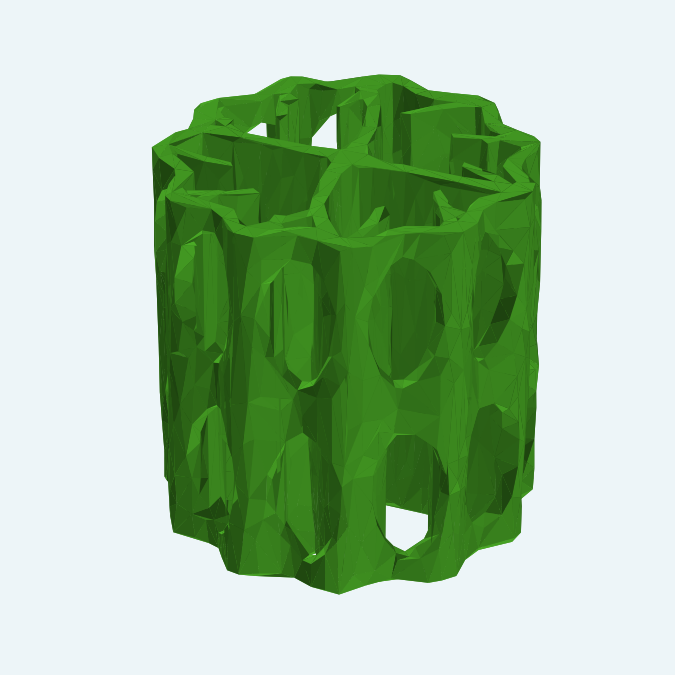
- Protected geometryInterior channels provide surfaces where a microbial community can remain.
- A living habitatAs on submerged stones and roots, biofilm attaches to a surface and contacts flowing water.
- Organic matter + O₂Biodegradable organic matter + O₂ → CO₂ + H₂O + new biomass (qualitative summary).
- Ammonium + oxygenNH₄⁺ → NO₂⁻ → NO₃⁻. Nitrification requires oxygen and specialized microorganisms.
- Nitrate + carbonNO₃⁻ → N₂ ↑ in an anoxic zone with an electron donor; not throughout an aerated tank.
- Nutrients → biomassSome N and P enter cells that are later separated. MBBR does not automatically remove all phosphorus.
Open the accessible 2D tour
Aerated reactor with moving carriers → carrier with protected surface → biofilm → aerobic organic-matter consumption → aerobic nitrification → denitrification in a separate anoxic zone → biomass growth and solids separation. The arrows are educational summaries, not balanced equations or performance claims.
From river stones to the reactor
In rivers and wetlands, submerged stones and roots can become coated with a thin living community called biofilm. Microorganisms take up substances from the passing water to grow, transforming some biodegradable organic matter and nutrients in the process. A treatment plant brings that principle of living surfaces into a controlled reactor, using small moving carriers instead of fixed stones.
What happens inside the reactor
Carriers provide protected surface for a biofilm. Water brings substrate and nutrients to the microorganisms; in an aerobic reactor, aeration transfers oxygen and helps keep the carriers moving.
AGAR®* combines this moving biofilm with a specific arrangement of reactor, aeration, carrier retention, and downstream separation.
* AGAR® is a technology developed by Aqwise, now part of BlueGen Water.
Protected surface and movement
Biofilm grows mainly inside each carrier’s channels. These provide protected surface while water, oxygen, and nutrients circulate around them. Mixing moves every piece through the reactor in translation and rotation.
Biological activity responds to load, temperature, oxygen, mixing, water composition, and operating time. Those variables guide reactor volume, aeration, and carrier quantity.
Reactor, carriers, and separation do different jobs
Retention screens keep carriers inside each reactor. Detached biomass travels with the water and requires a later separation stage. That is why the historical diagram shows MBBR reactors followed by a clarifier.
MBBR and MBR perform different functions: MBR uses membranes for final separation. Transforming nitrogen also requires aerobic nitrification conditions and an anoxic denitrification route.
What do microorganisms transform?
Biofilm does much more than transform nitrogen. Different communities of microorganisms use substances in the water as food and material for growth. Four processes help explain biological treatment:
1. Consume organic matter (BOD). With oxygen, many bacteria break down biodegradable organic matter, releasing carbon dioxide and water while producing new biomass:
Organic matter + O₂ → CO₂ + H₂O + biomass (simplified aerobic process).
2. Transform ammonium. Other microorganisms need oxygen for nitrification:
NH₄⁺ → NO₂⁻ → NO₃⁻ (ammonium → nitrite → nitrate).
3. Turn nitrate into nitrogen gas. In an anoxic zone—without dissolved oxygen and with an available carbon source—denitrification occurs:
NO₃⁻ → N₂ ↑ (a summary of a pathway with several intermediate reactions).
4. Incorporate nutrients into new cells. Some nitrogen and phosphorus become part of growing microbial biomass. When those solids are separated, their nutrients leave with them; not every MBBR configuration automatically removes phosphorus.
The visualizer above lets you explore organic matter removal, nitrification, denitrification and biomass growth separately. These are different processes, and they do not all take place in a uniformly aerated tank.
Why MBBR can support a compact plant
By concentrating biomass on moving surface, MBBR can reduce the volume needed for the biological stage and help modernize existing tanks. A complete solution still integrates pretreatment, aeration, carrier retention, solids separation, sludge handling, and controls.
Related solutions
Wastewater treatment
Wastewater treatment engineering from characterization and design through construction, commissioning, and operation.
Explore the solutionModernization and operations
Assessment, upgrades, automation, maintenance, and optimization for existing treatment plants.
Explore the solutionRelated projects
Serena del Mar — Treatment engineering in Cartagena
In Cartagena, Vandens integrated two MBBR reactors, MC clarification, aeration, pipework and automation into a wastewater plant designed for practical operating access.
View projectCAMINO Nazareth — Institutional plant modernization
At CAMINO Nazareth in Barranquilla, Vandens modernized an institutional wastewater plant with a 21 m³/day design capacity by reusing tanks and renewing biological stages, pumping, aeration and controls.
View projectWhat water do you have, and what do you need to achieve?
We can review the source, destination, and available information to identify the next step.
Request a Quote