
Three fundamentals of wastewater treatment
Water source and contaminants, biological treatment, separation, and the final destination.
Read articleIntegrated treatment plant
In Cartagena, Vandens integrated two MBBR reactors, MC clarification, aeration, pipework and automation into a wastewater plant designed for practical operating access.
Explore the 3D model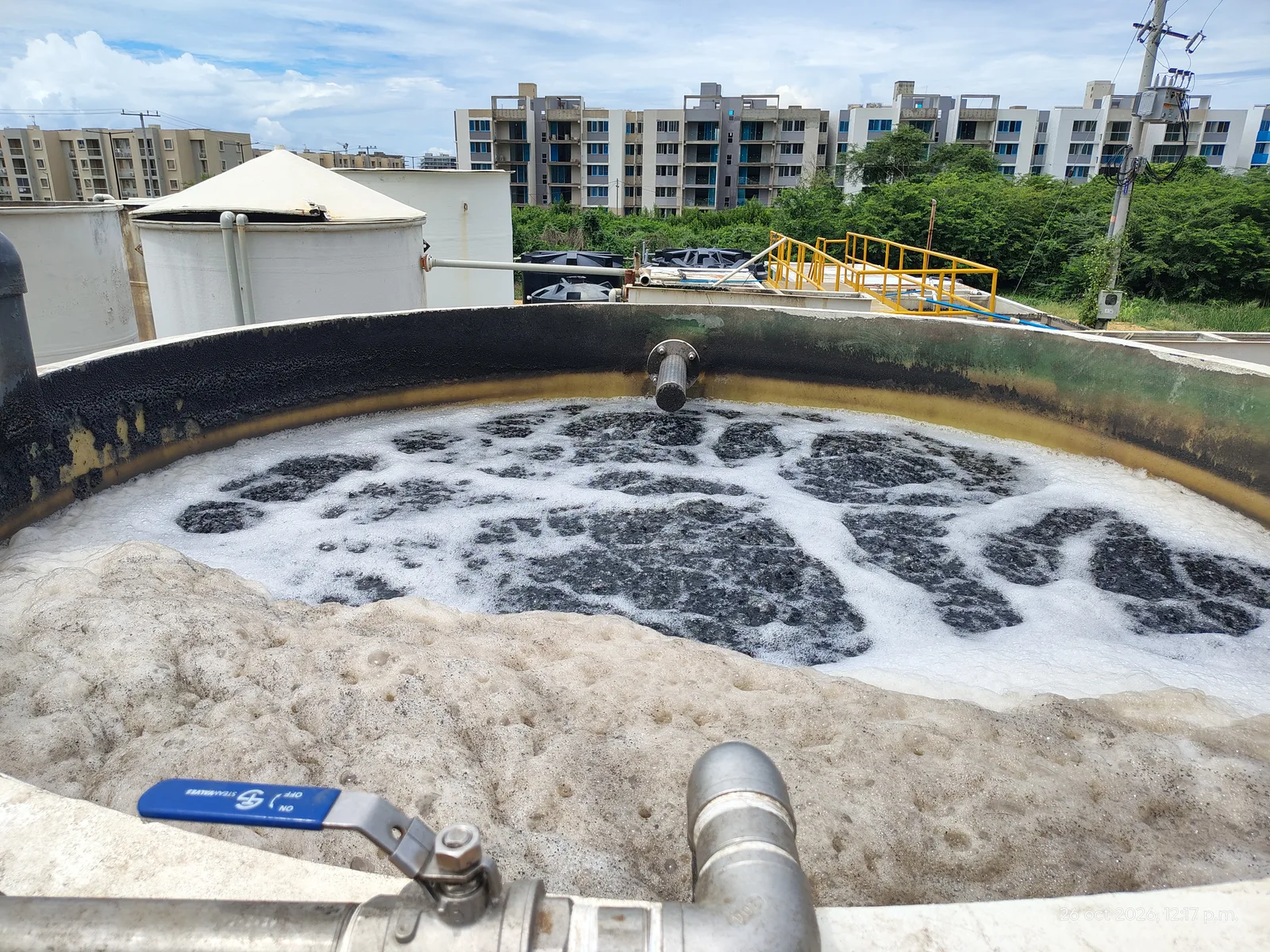
Expanding a wastewater treatment plant means solving two problems at once: treating the water and making sure people can inspect, adjust and maintain every major component. At Serena del Mar, engineering brought biological treatment, supporting equipment and maintenance access together in one compact installation.
The 4A Phase II treatment plant serves the Corales expansion at Serena del Mar. Bringing treatment units together on the site required coordination of tanks, connections, supporting equipment and walkways.
The engineering layout includes screening, equalization, two moving-bed biofilm reactors (MBBR) and MC clarification. Screening keeps troublesome materials away from pumps, while equalization helps regulate the flow entering biological treatment. The water then moves through the reactors and onward to solids separation.
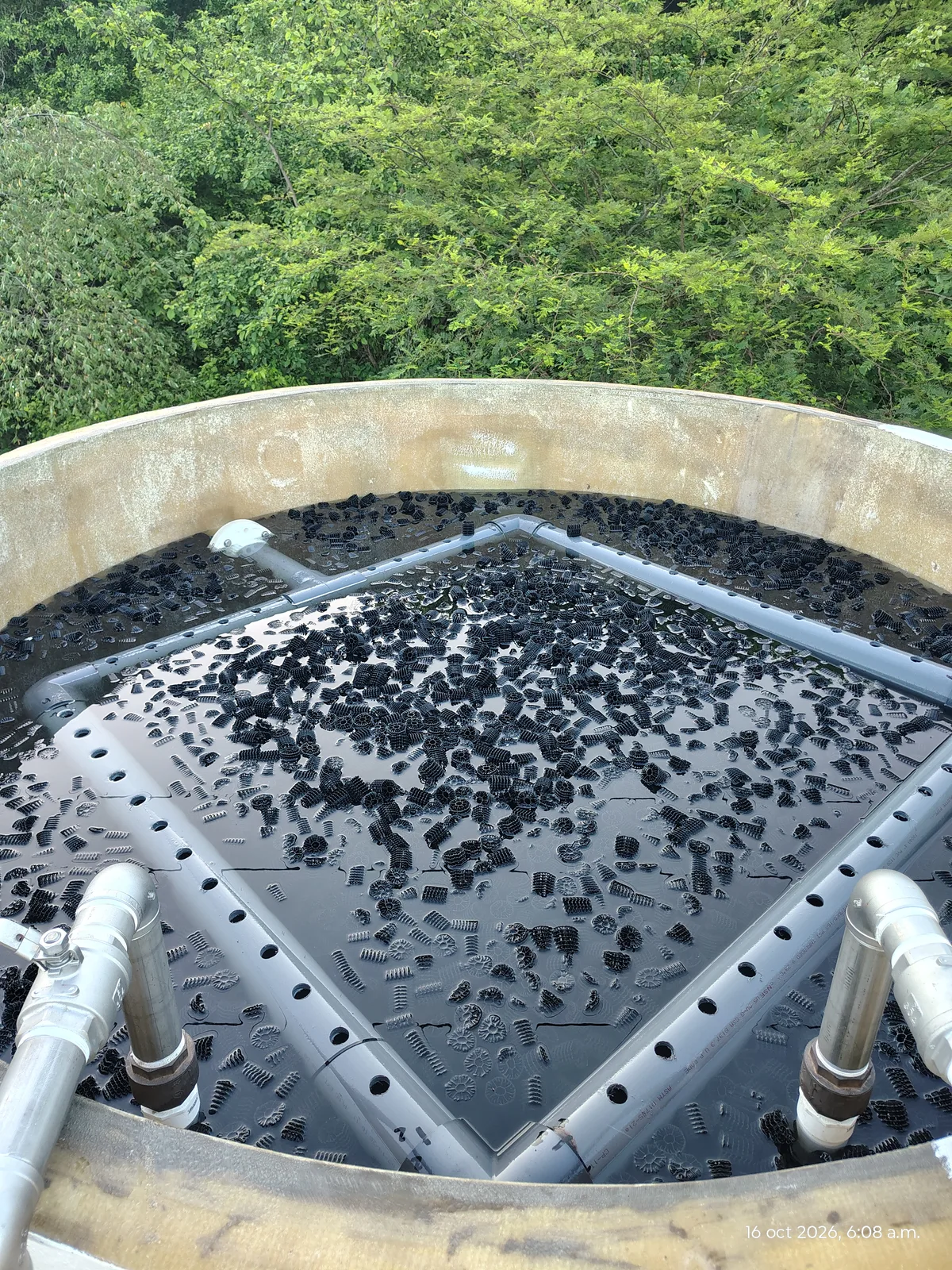
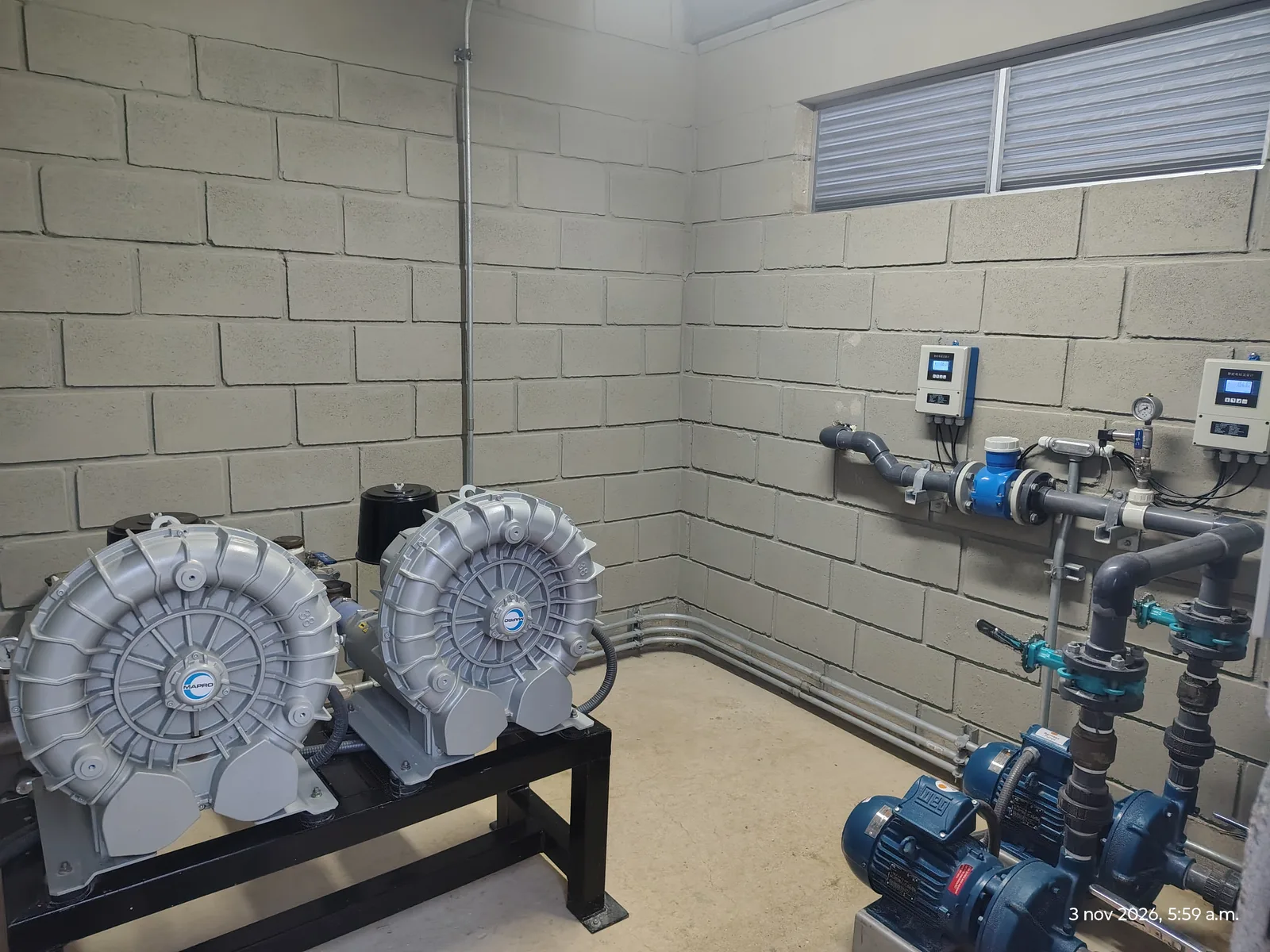
Inside an MBBR reactor, small moving carriers give microorganisms protected surfaces where they grow and break down biodegradable organic matter. Blowers deliver air, pipework connects the units and clarification separates the biomass carried out with the water.
Vandens integrated hydraulic and air networks, sludge handling, pumps, valves, instrumentation and an HMI operator interface. Designing these services as a coordinated system helps avoid clashes and gives operators a clearer view of what each part of the process is doing.
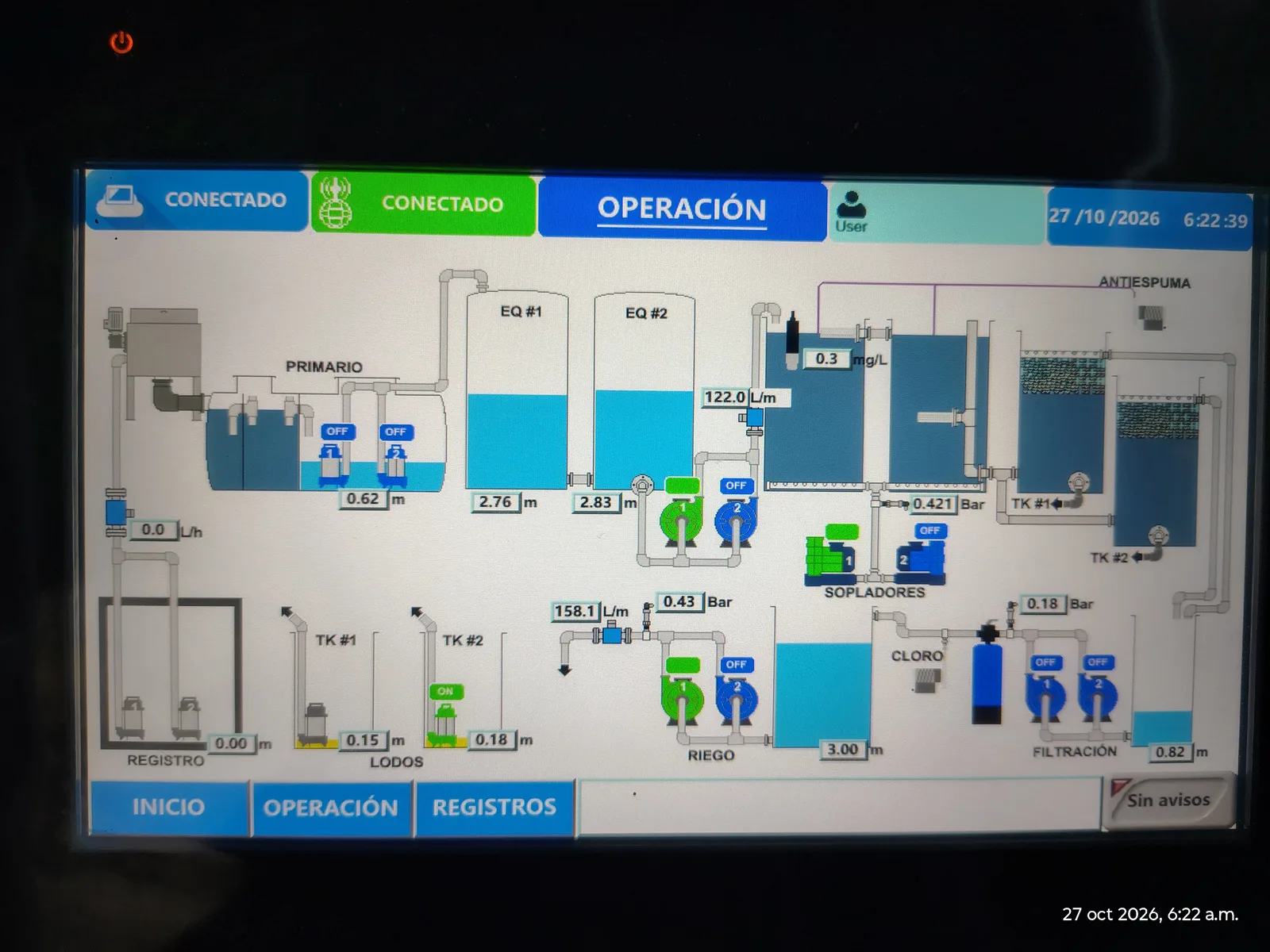
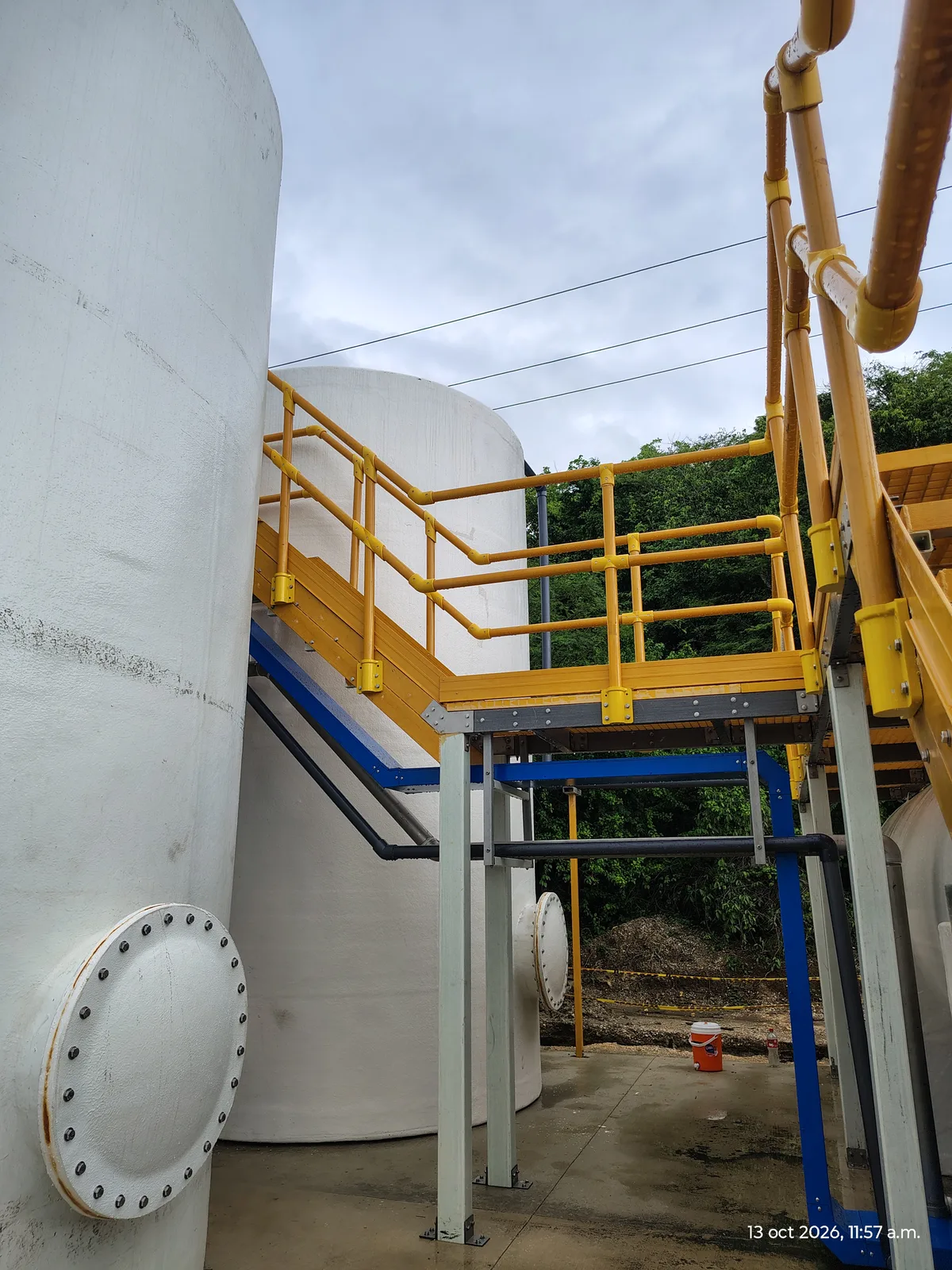
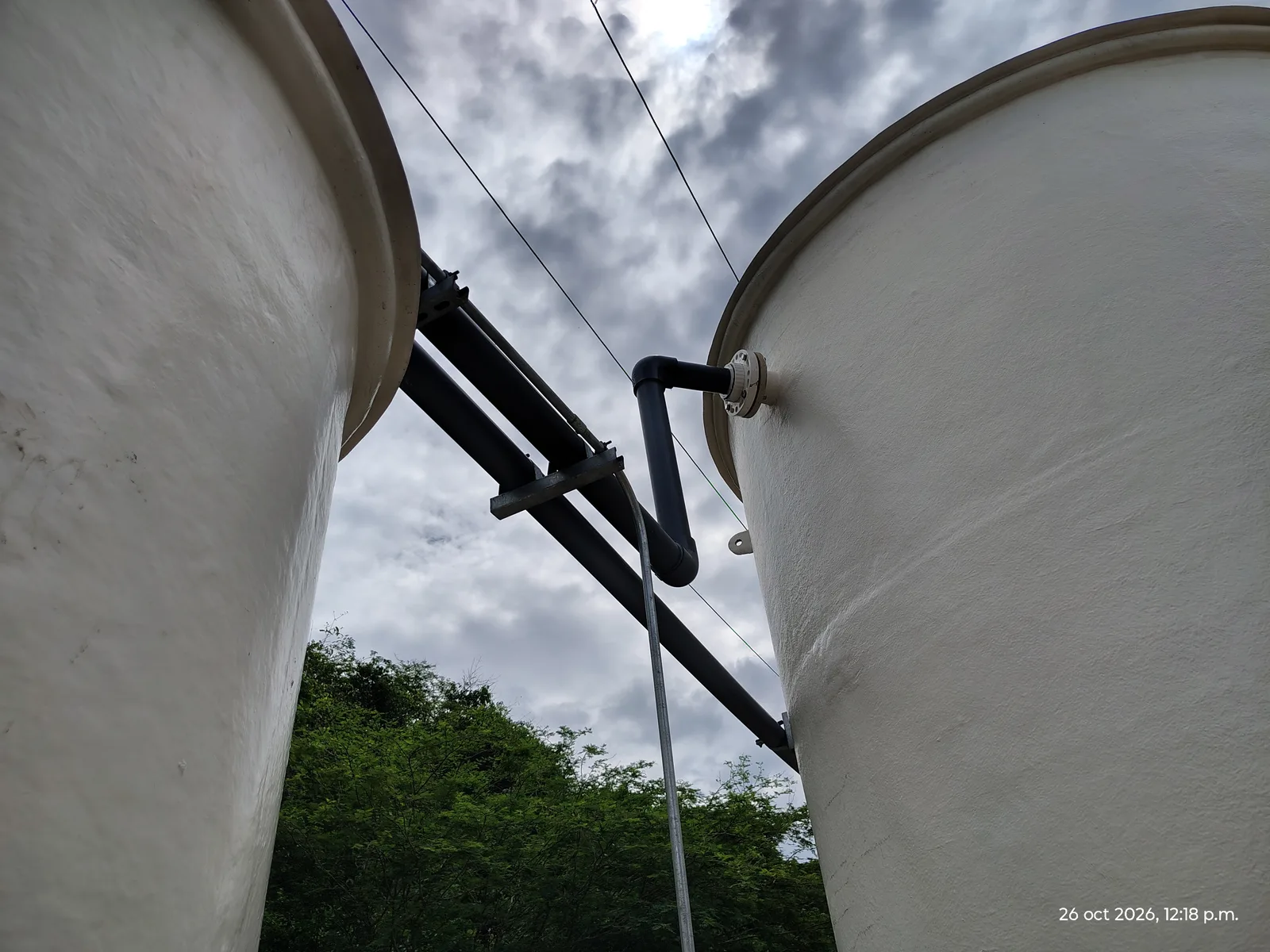
Stairs, walkways and supports are much more than finishing details: they allow technicians to reach valves, instruments and equipment without improvised interventions. Authentic photographs from the Cartagena site show the tanks, pipework, equipment room and access arrangements.
The interactive plant walkthrough brings these elements together so visitors can follow the arrangement of the process, equipment and structures. It shows how a treatment plant becomes workable, from its overall layout down to the details operators use.
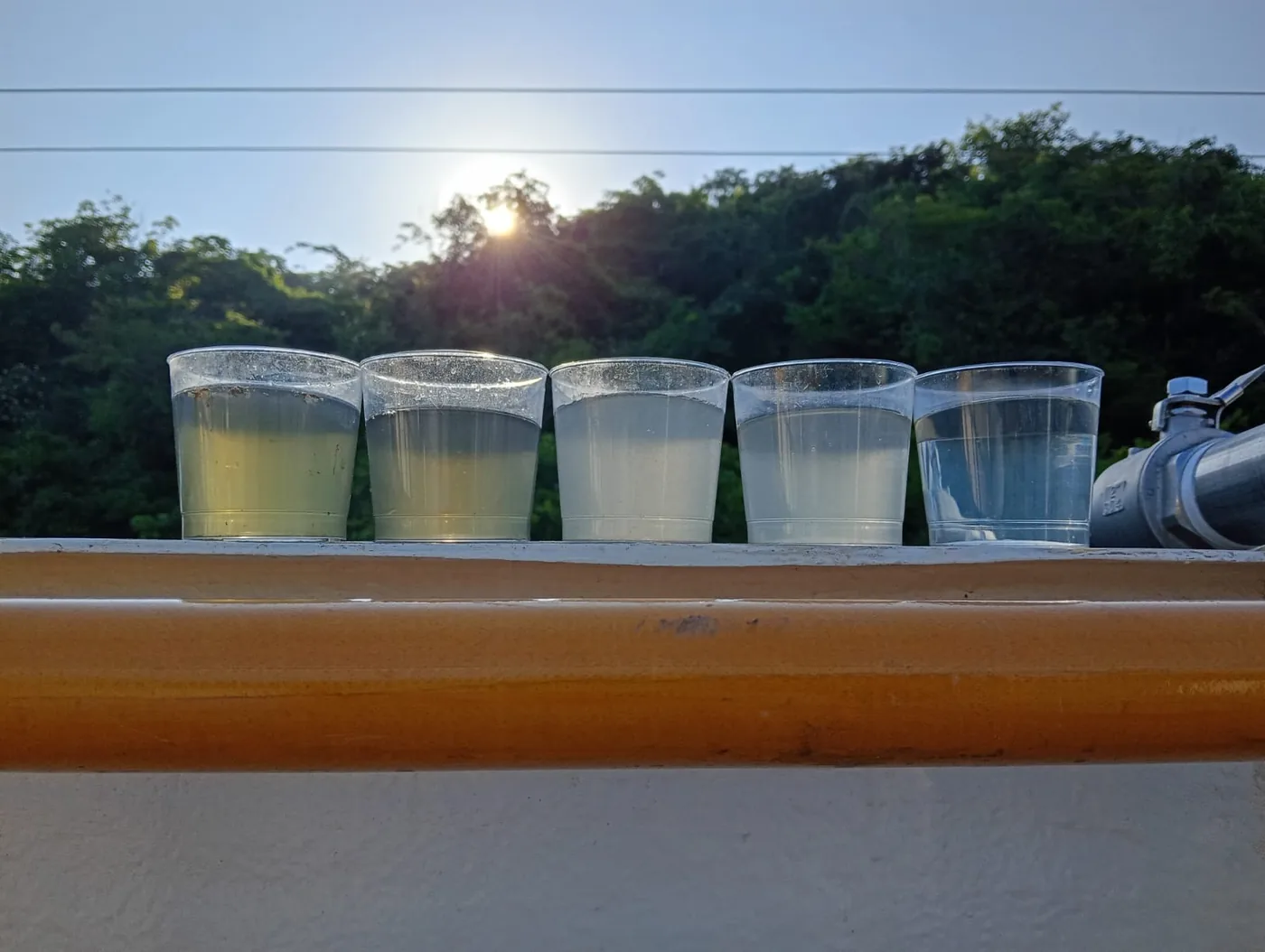
Process observation
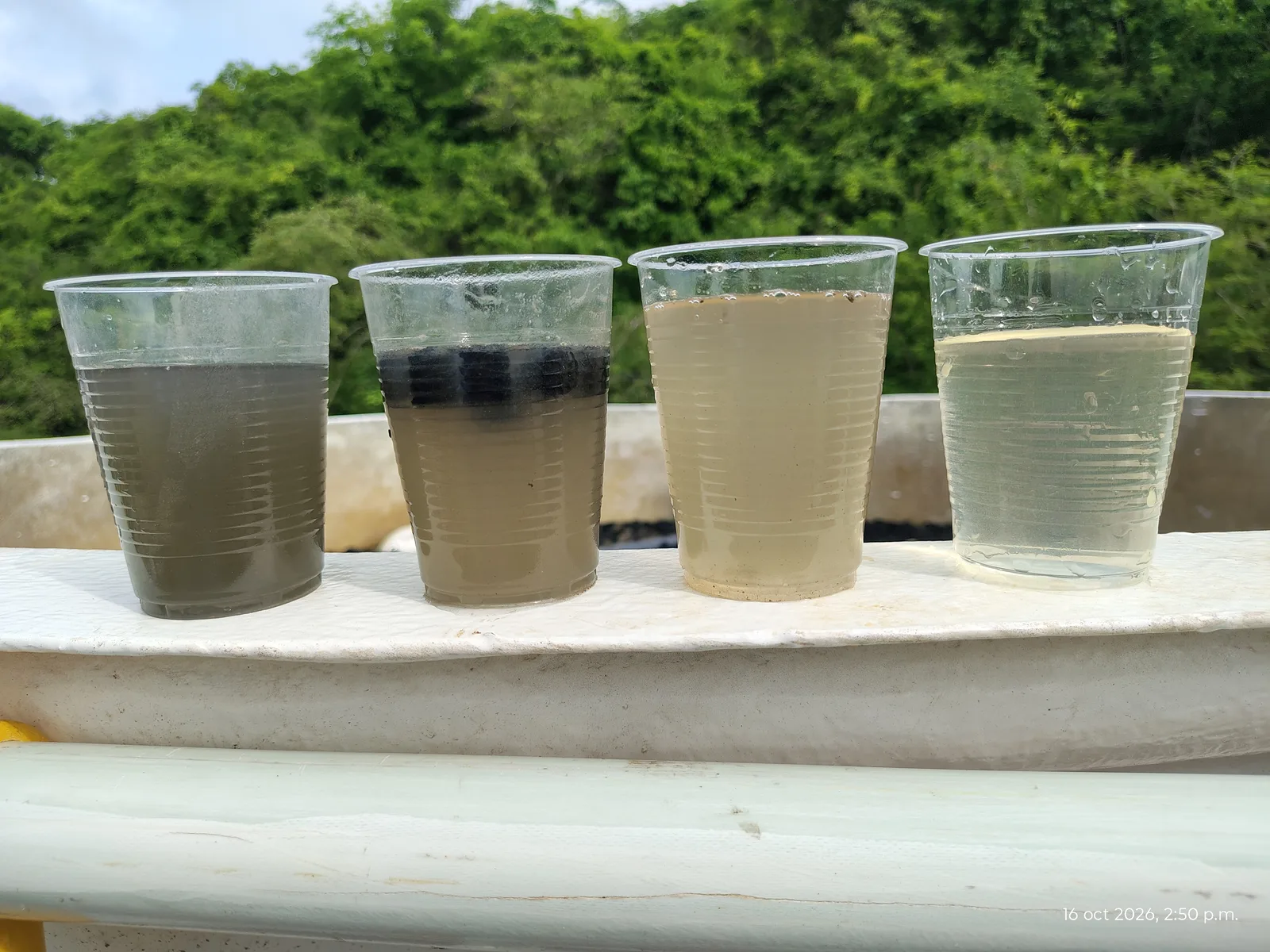
Five cups show water observed along the Serena del Mar treatment line. The sequence makes each treatment stage visible.
Review the general arrangement of tanks, equipment and access routes. The single-line diagram adds the electrical supply and control-system perspective.
The biological reactors hold biomass on moving carriers in a compact configuration.
Downstream separation completes the biological train and directs solids to handling.
Blowers, pumps, and interconnections are coordinated with the process and available space.
Automation and physical layout help the operating team observe and maintain the plant.
Water source and contaminants, biological treatment, separation, and the final destination.
Read articleFrom river stones to treatment reactors: how communities of microorganisms help clean water.
Read articleFlow, loads, target quality, process train, validation, and operating conditions.
Read articleTell us what wastewater you need to treat, what infrastructure you already have and how the plant needs to operate.
Optional analytics
May we collect aggregate usage statistics to improve this website? We do not share contact inquiry details. Declining does not affect the site.