
How treatment solutions are designed
Flow, loads, target quality, process train, validation, and operating conditions.
Read articleEngineering proposal
For 55 m³/day of design sanitary wastewater flow at its Soledad site, Corteva received two prefabricated options from Vandens: vertical FRP tanks or a 40-foot containerized treatment module.
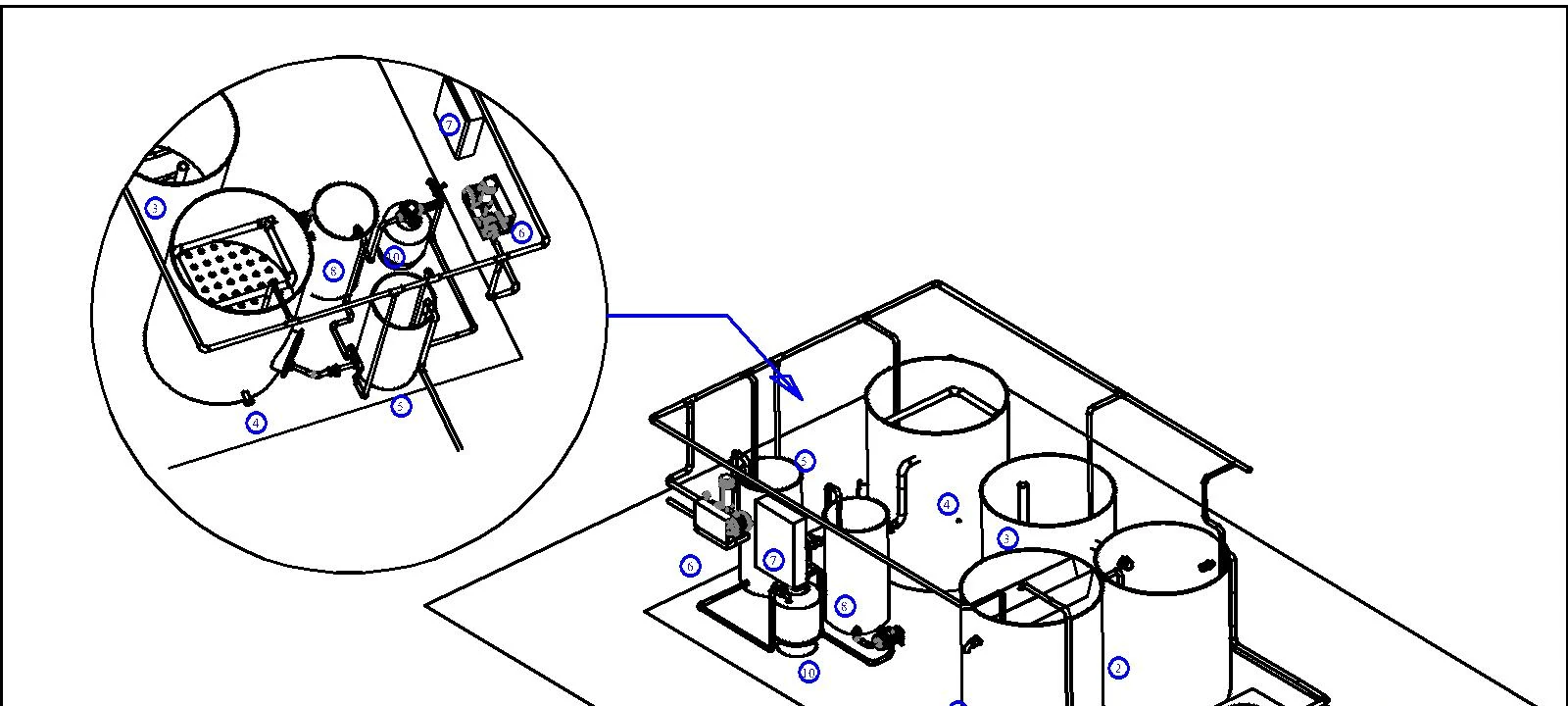
An industrial facility needs to treat its sanitary wastewater without turning treatment into construction work that disrupts production. For Corteva in Soledad, Vandens proposed reusing the existing slab and suitable equipment while comparing two compact layouts that can be prepared before installation on site.
The need was to treat domestic wastewater generated at a production facility in Soledad, Atlántico. The proposal specifies a design flow of 55 m³/day, or approximately 0.64 liters per second. This is sanitary wastewater, not wastewater from the manufacturing process.
Vandens developed a decentralized treatment option that uses the existing concrete slab and retains suitable primary equipment. Prefabricating part of the system allows installation planning to focus on essential on-site connections and work.
One alternative arranges treatment in vertical cylindrical fiberglass-reinforced polymer (FRP) tanks. The vessels can be positioned on the slab with access around individual tanks. The other packages the biological treatment system inside a 40-foot ISO high-cube container, with components prepared for field integration.
These configurations change transport, lifting, connections and maintenance logistics. Instead of specifying one standard package for every project, the engineering compares site geometry with installation requirements and access to pumps, blowers and controls.
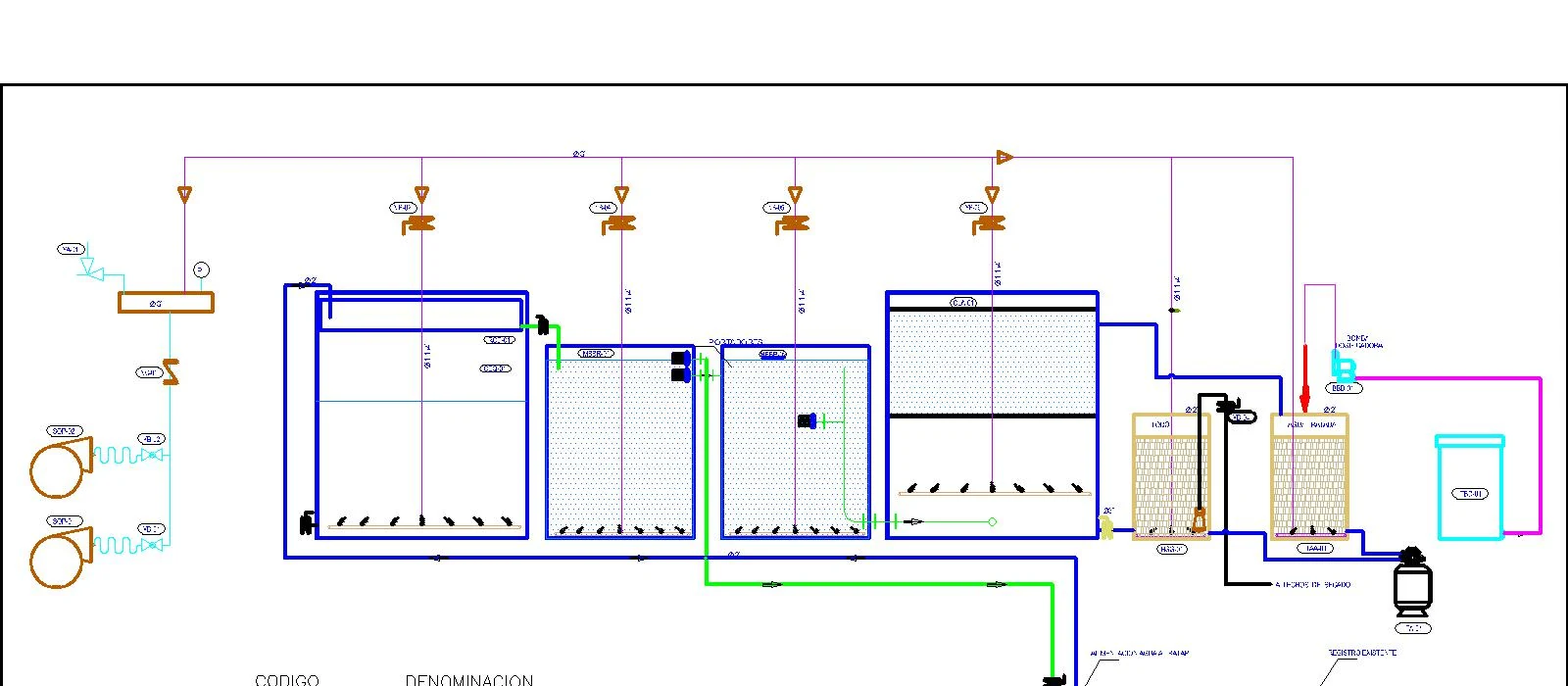
Both configurations propose a process with pretreatment, equalization, two aerobic MBBR stages and MC clarification. Each biological reactor has a proposed net design volume of 7.5 m³ and a planned carrier fill fraction of 40%. The moving carriers provide surface for biofilm growth while aeration supplies oxygen and maintains mixing.
The technical scope also includes coarse-bubble aeration, two blowers, water and sludge pumps, pipework and solids handling. Designing these components together helps coordinate installation, maintenance access and operating energy needs from the outset.
The proposal includes an electrical and control panel, PLC, HMI screen and instruments for dissolved oxygen, level, flow and pressure. These give operators the means to follow important variables and respond to changing treatment conditions.
The value is not merely compact equipment: it is a process, equipment and connection plan designed to work together on the site. For facilities that need wastewater treatment without extensive civil works, the FRP-versus-container choice demonstrates how engineering can fit a real operating environment.
Separate vessels provide layout flexibility and access around each tank.
A transportable module concentrates assembly, equipment, and controls.
Biological treatment and clarification are arranged as a compact treatment train.
The slab and suitable primary elements are part of the layout decision.
Flow, loads, target quality, process train, validation, and operating conditions.
Read articleHow prefabrication, equipment integration, and retained infrastructure can simplify a treatment plant.
Read articleFrom river stones to treatment reactors: how communities of microorganisms help clean water.
Read articleTell us what wastewater you need to treat, what infrastructure you already have and how the plant needs to operate.
Optional analytics
May we collect aggregate usage statistics to improve this website? We do not share contact inquiry details. Declining does not affect the site.